
Simple on the outside. Careful on the inside.
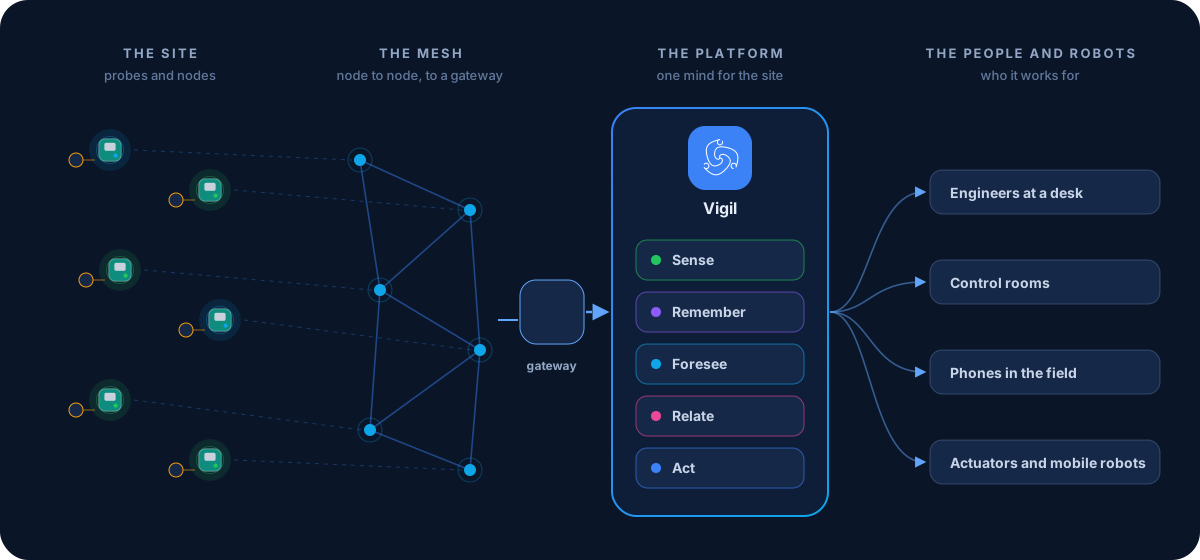
Probes and nodes on the equipment, a mesh that links them, one platform that thinks for the site, and the people and robots it works for. Here's the shape of it — and the promises we keep at every layer.
Plug and play
Probes describe themselves — what they measure, in what units, how they were calibrated — so connecting one is the whole set-up.
A mesh that grows
Nodes relay for one another, so every node added extends the coverage. A gateway brings the mesh to the platform.
One shared model
Every reading lands in one physical model of the site — assets, quantities, units — so tools never disagree about what something is.
Memory underneath
Everything the platform concludes and everything people record is kept with its provenance, and every tool reads from it.
Bring your existing sensors along.
Few sites start from nothing. Vigil takes readings from the instruments and systems you already run, through standard industrial and internet protocols and an open API — and gives them the same memory, forecasts and health states as our own nodes.
- Existing loggers, meters and controllers, via a gateway or directly
- Your own software, through the API and webhooks
- Exports and workflows for the spreadsheets and reports you already use
A platform that moves equipment has to earn it.
These are the principles we build to, at every layer.
Every device is known
Each node and probe has its own identity on the platform. Nothing joins a site without being claimed, and every reading is attributed to the device that sent it.
Protected in transit
Every connection between site and platform is designed to travel encrypted, and access is by role — operators, engineers, administrators — with sessions that expire.
People approve change
Commands, rule changes and actions proposed by the AI wait for a person. Programmes put settings back by themselves when they end.
A complete record
Who changed what, when, and why — kept in an audit log and in the site's memory, where the next person will see it.
AI that shows its work
Answers cite the data they used, and any number the platform can't find in that data is flagged for you.
Your data, your site
The platform and its AI can run on your own hardware, so sensitive sites never have to send data off the premises.
It knows a pascal from a percent.
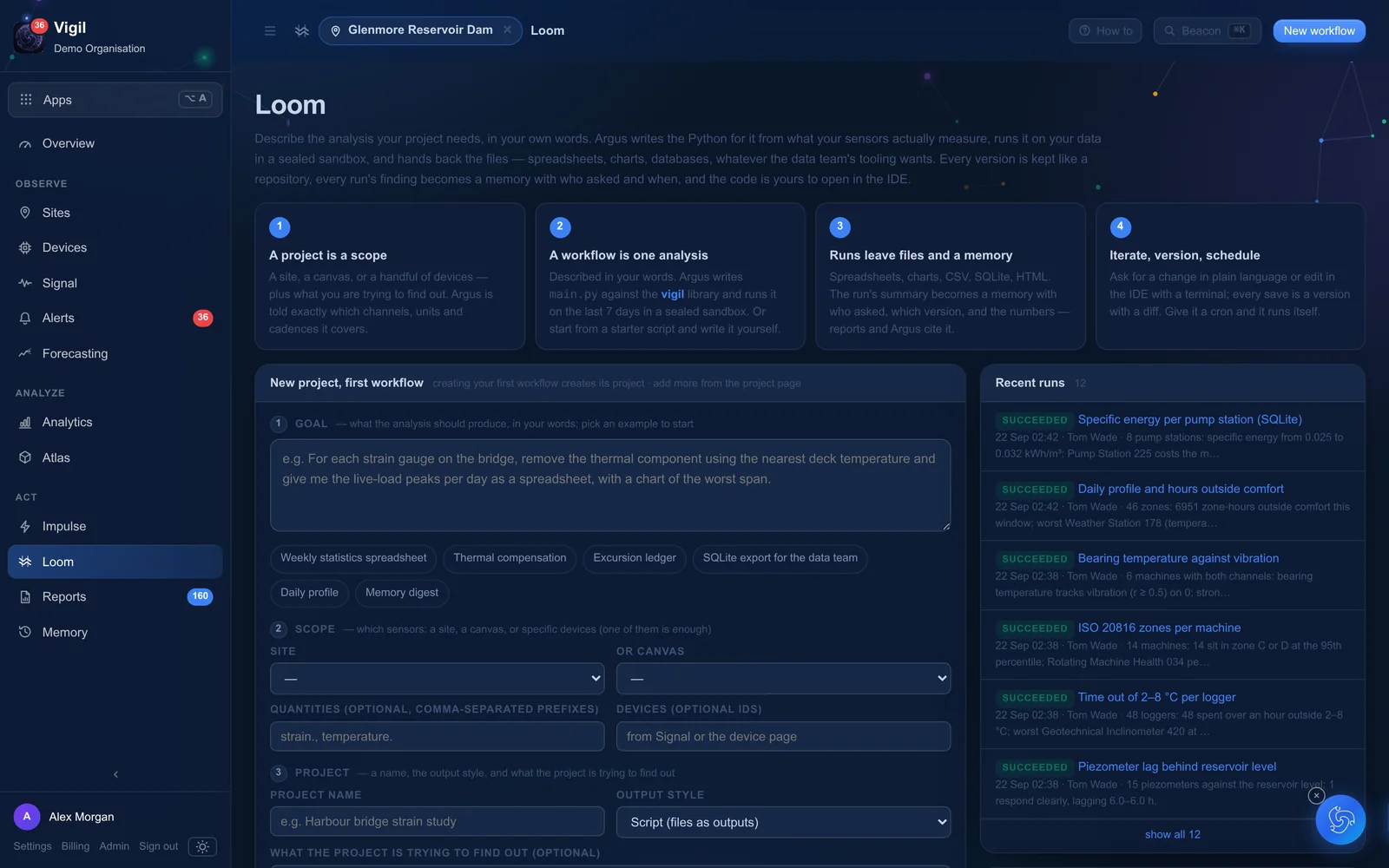
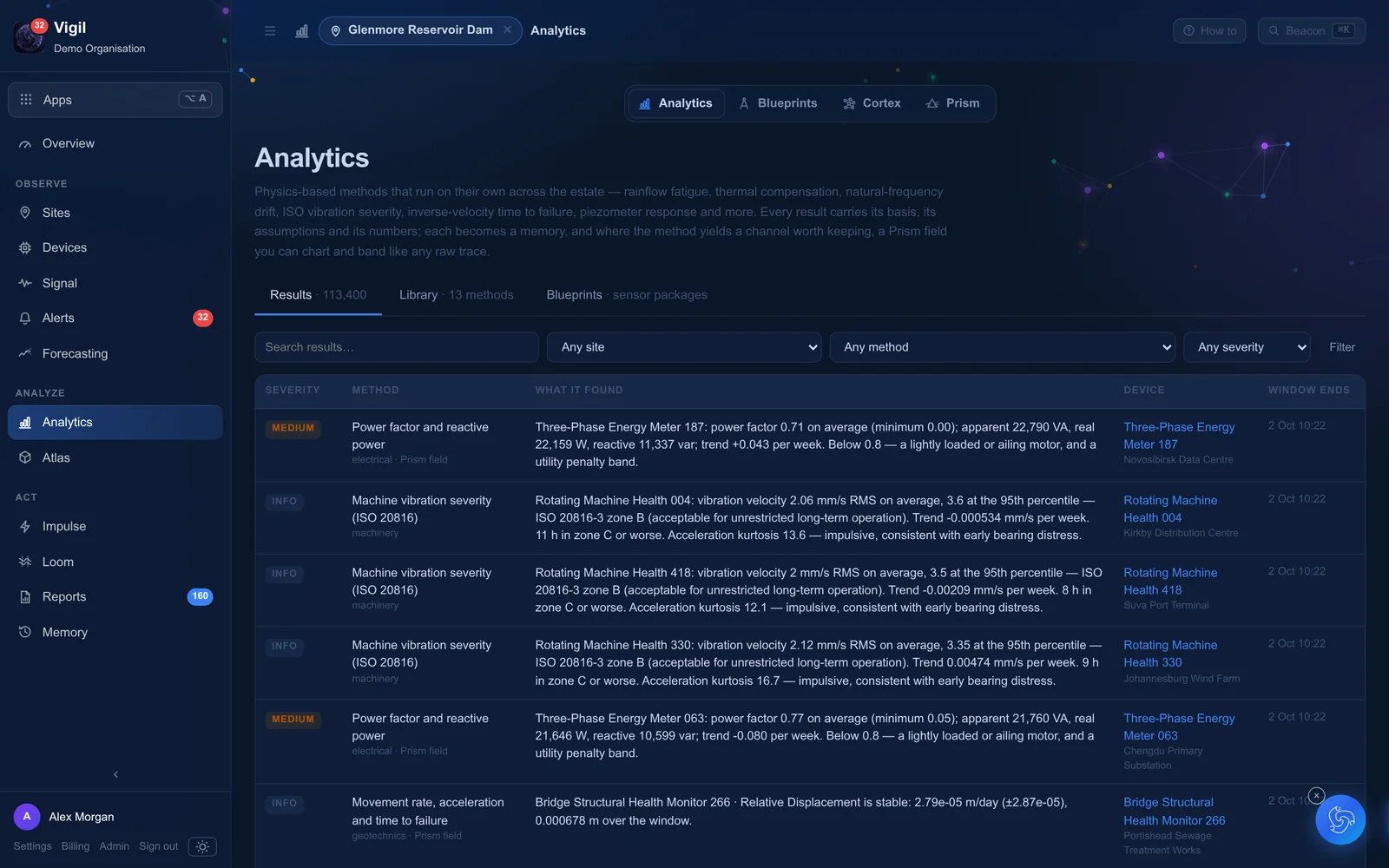
Every reading carries its physical quantity and unit, and every asset its type. That's why a forecast can use the weather as a driver, a report can compare a pump with its siblings, and Argus can tell you that a strain gauge and a thermometer on the same girder are telling the same story.
- A canonical model of physical quantities and units
- Assets and how they relate, from surveys and from the data
- Physics-based checks that run on a timer
Let's make sense of your site.
Tell us about a site — a plant, a dam, a campus, a cold store. We'll show you the platform on demo data like yours and plan a pilot with nodes on your equipment.