
Wherever the work is spread across a site.
If your people spend their days walking between equipment to read gauges, turn valves and write things down, distributed intelligence pays for itself. These are the places we're starting.
The questions every site asks, answered to the standard.
Whatever the industry, the same five questions come up. Each pack answers one, using the standard that field works to, and writes the report it has to file. Ask Argus or Compose and they use them too.
Energy
kWh, cost and carbon by day and hour; baseload and out-of-hours waste; expected use normalised for the weather by degree days; power factor; the biggest consumers.
Environmental compliance
Air quality and noise against WHO 2021 and US EPA guidelines or your permit limits, with their averaging periods, data capture, and the weather on the days that broke.
Machine health
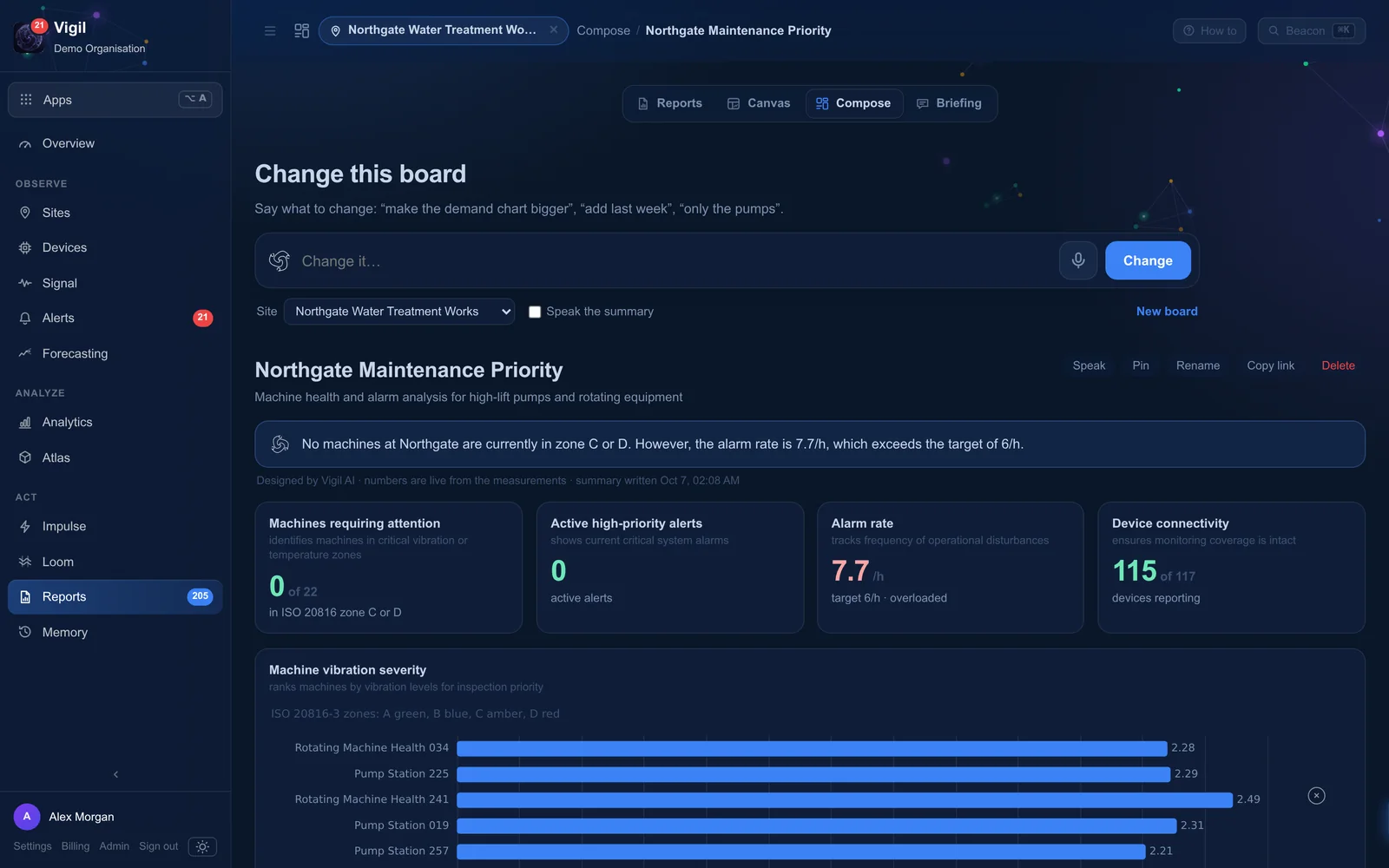
Vibration in ISO 20816 zones and its trend, run hours, starts, duty cycle and bearing temperature, and the machines to look at this week, ranked.
Alarm health
ISA-18.2 alarm rates: floods, chattering and stale alarms, bad actors, the share that cleared themselves, and what to change to get under six an hour.
Knowledge graph
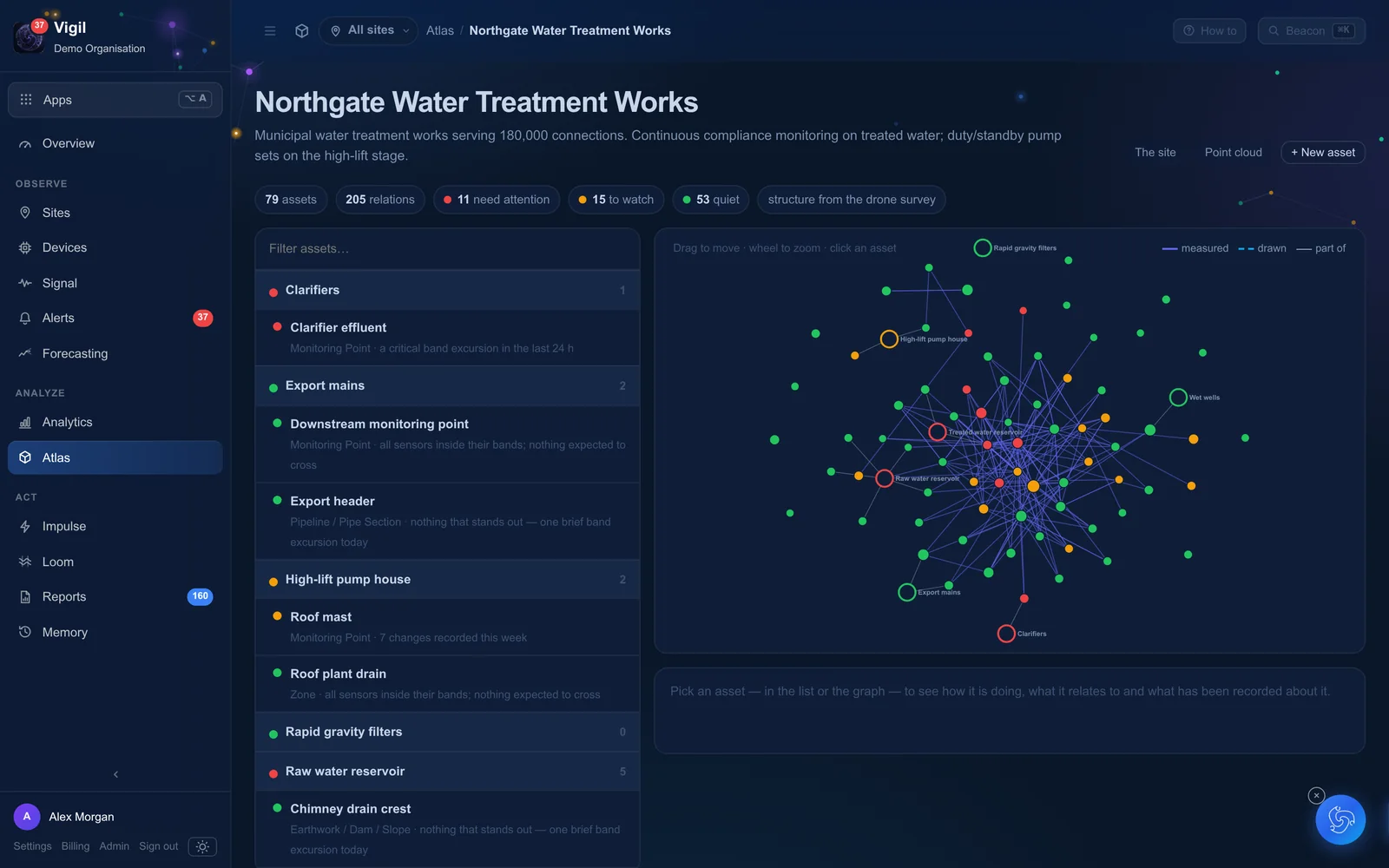
P&IDs read into a live graph of ISA-5.1 tags, loops and lines, matched to the sensors that measure them, in the ISA-95 hierarchy, exported as DEXPI and as Brick and Haystack JSON-LD.
Ask for any of it
"Which machines need looking at, and why?" Compose builds the board; Argus answers in words. Ask & build
Pack prices are on the pricing page.
Water & wastewater
A works is pumps, dosing, tanks and outfalls spread over acres — and the night a duty pump trips is the night nobody's there.
Senses
Flow, level, pressure, turbidity, dissolved oxygen, pump vibration and current.
Acts
Starts standby pumps, trims dosing, opens and closes valves — within the limits you approve.
Foresees
Tank levels and inflows hours ahead; the pump whose vibration is creeping up week on week.
Dams & earthworks
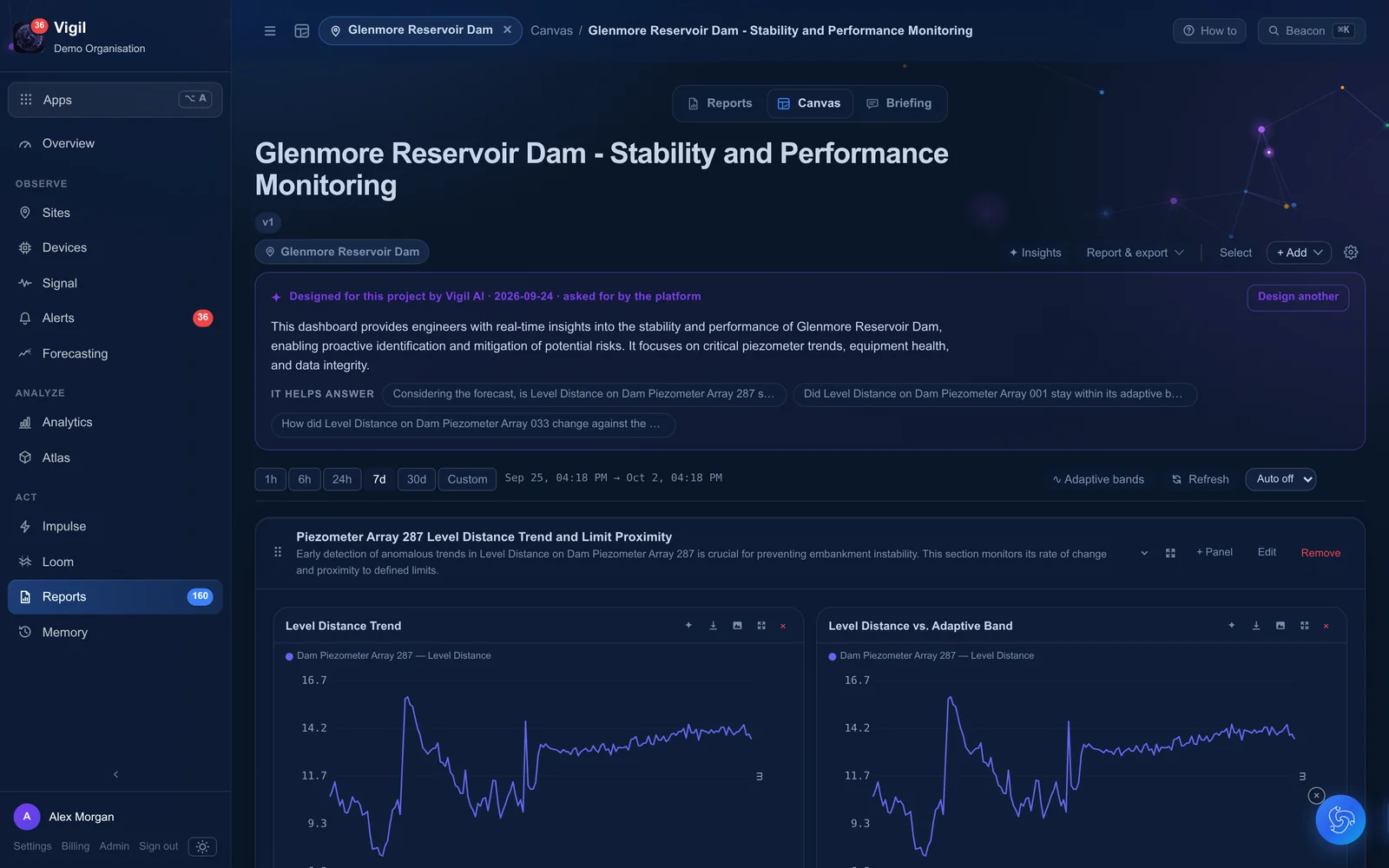
Piezometers, seepage weirs and movement points across a structure nobody can walk every day — and storms that don't wait for the monthly reading.
Senses
Pore pressure, seepage flow, reservoir level, tilt and settlement, rainfall.
Acts
Samples every minute through a storm, then goes back to normal; drafts the relief-valve decision for an engineer.
Foresees
Which piezometers will cross their limits tonight, and how the reservoir drives them.
Bridges & structures
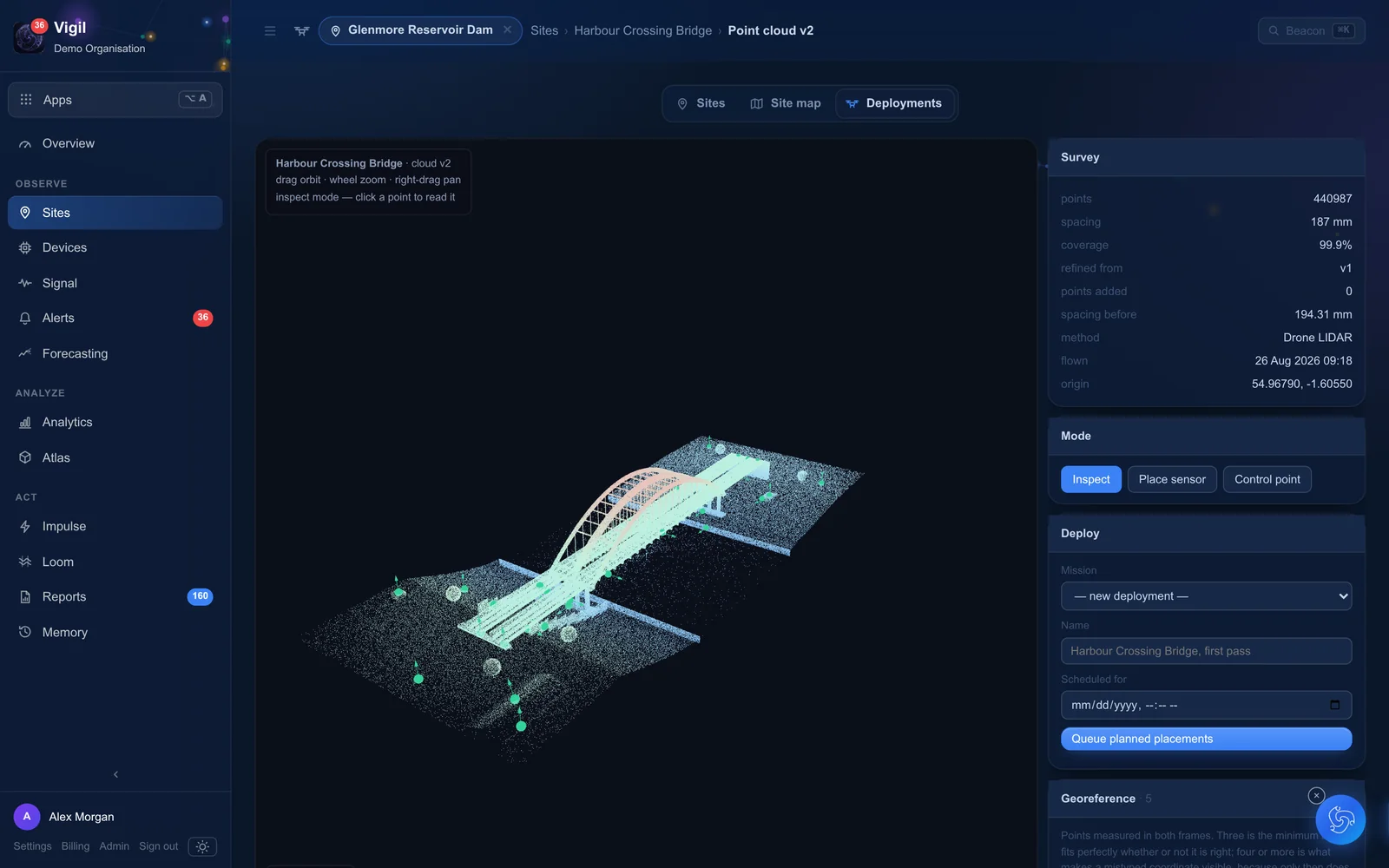
Spans, girders and bearings where getting a person to the sensor means closures, access platforms and risk. Drones place the nodes; the structure reports on itself.
Senses
Strain, vibration, tilt, displacement, bearing temperature, wind.
Deploys
3D survey, a placement plan for every node, and Perch drones that fly them into place.
Relates
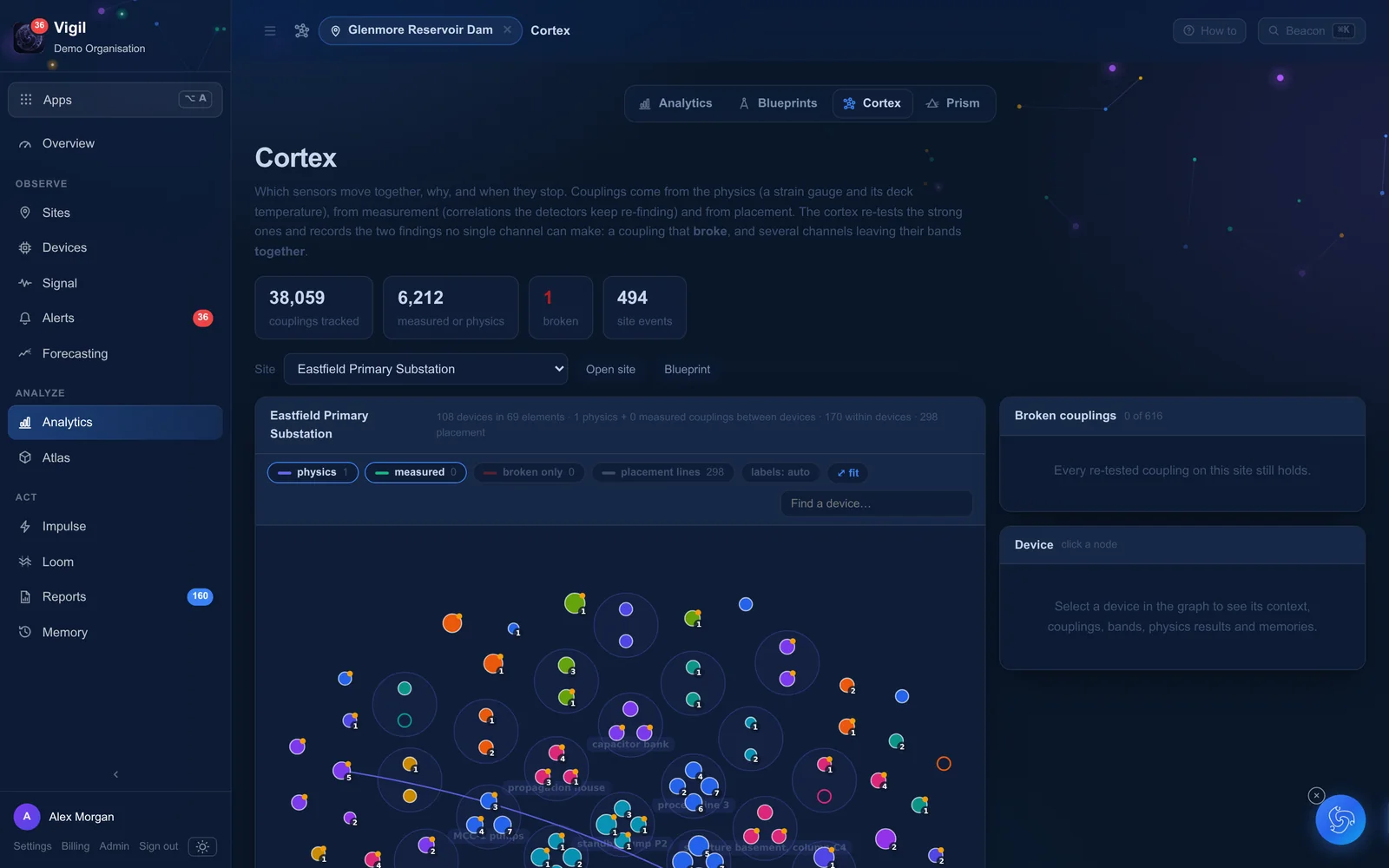
Which readings move with temperature and traffic — and which stopped moving with the rest.
Substations & energy
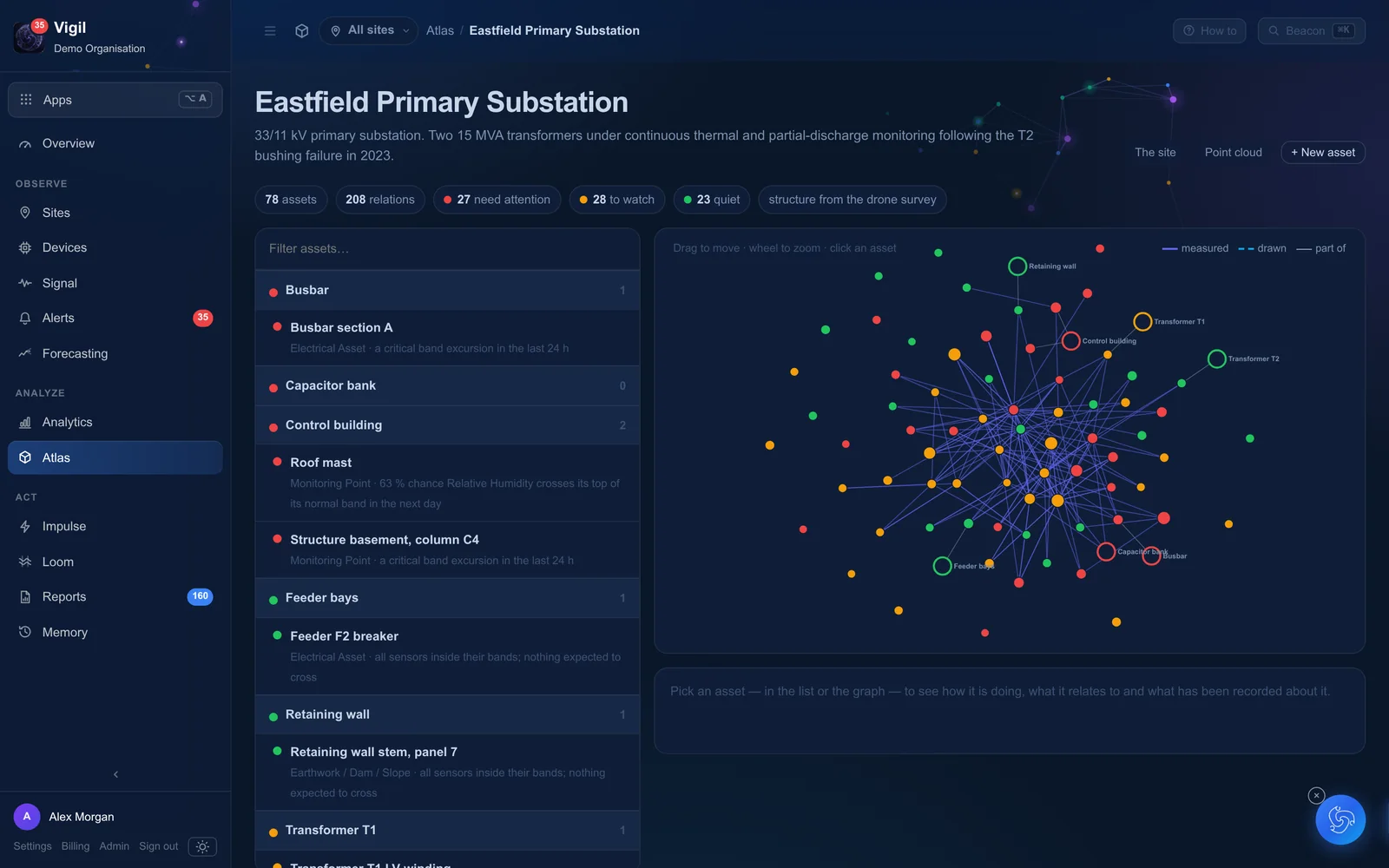
Transformers, breakers, cooling and batteries at sites that are remote by design — where a hot spot found early is a planned outage instead of an unplanned one.
Senses
Surface and oil temperature, current, humidity, cabinet doors.
Acts
Switches cooling on before the heat builds; isolates a cabinet heater; logs the action.
Relates
A unit running hotter than its peers in the same weather — the fault, not the forecast.
Plants & workshops
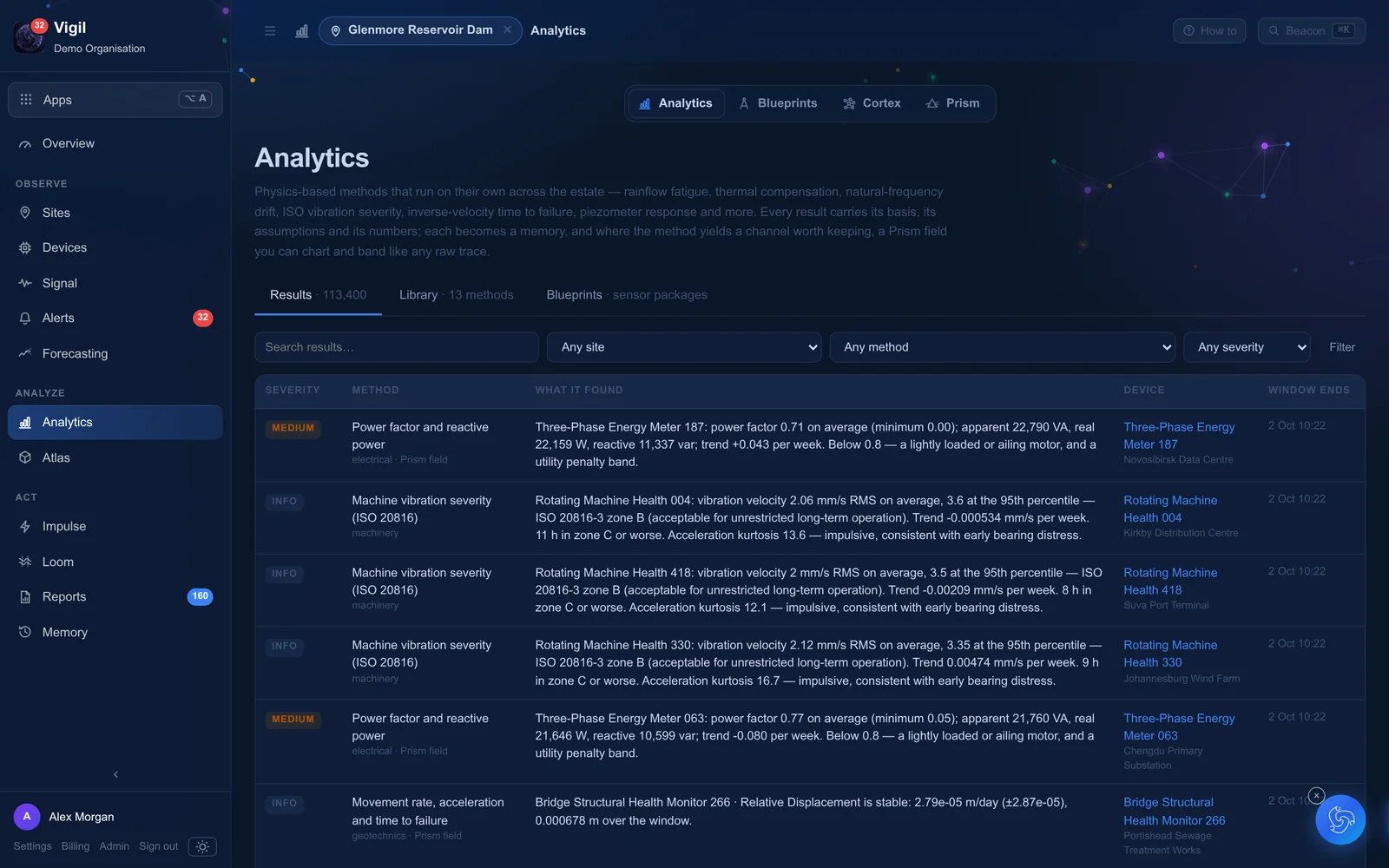
Rotating machines, compressed air, steam, chillers and the utilities nobody watches until they stop. Find the bearing that's wearing before it decides the shutdown date for you.
Senses
Vibration, current, temperature, pressure, air leaks, energy per line.
Acts
A vibration watch at high rate for a week; idle equipment switched off out of hours.
Analyses
Physics-based checks for condition, fatigue and time to failure, on a timer.
Cold chain & food
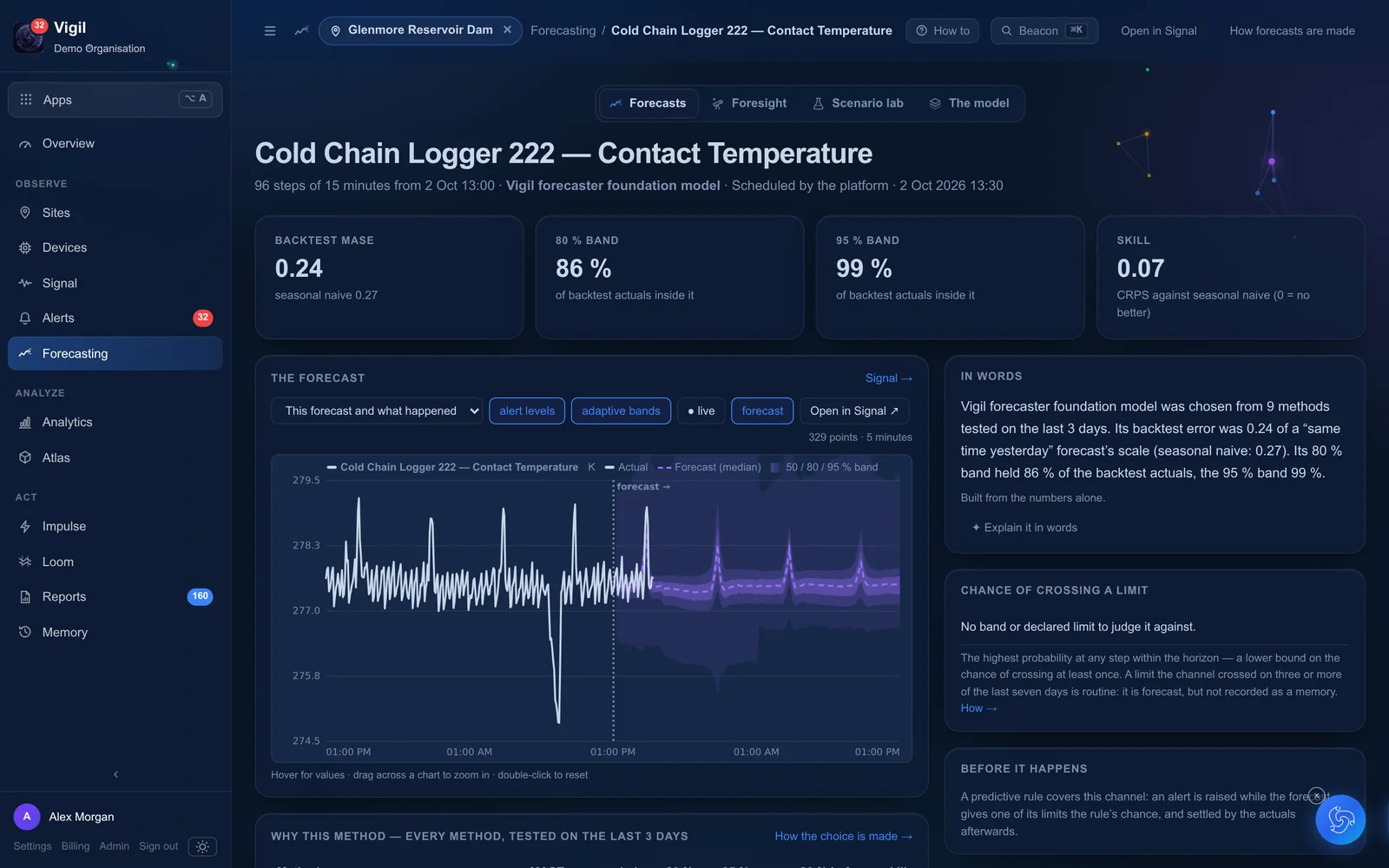
Every store, freezer, door and compressor — and an auditor who wants to know exactly when the temperature left range, for how long, and what was done.
Senses
Air and product temperature, door state, compressor current, refrigerant leaks.
Acts
Closes a door left open; stages compressors; warns before a defrost cycle goes wrong.
Remembers
The full record, ready for an audit: every excursion, its length and its fix.
Data centres & campuses
Rooms, racks, plant rooms and lecture halls across many buildings — comfort, uptime and energy, without a technician in every corridor.
Senses
Temperature, humidity, CO₂, particulates, power, leaks under the floor.
Acts
Dampers, fans and setpoints nudged room by room as occupancy and heat change.
Foresees
The room that will run hot this afternoon, and the chiller that's losing ground.
Greenhouses & farms
Climate, irrigation and stock across houses, fields and sheds — where an hour of heat or a stuck valve costs a season.
Senses
Air and soil temperature, humidity, light, soil moisture, water flow.
Acts
Opens vents before the heat does damage; runs irrigation zone by zone.
Remembers
What worked last year in the same weather — notes and data together.
Ports, terminals & logistics
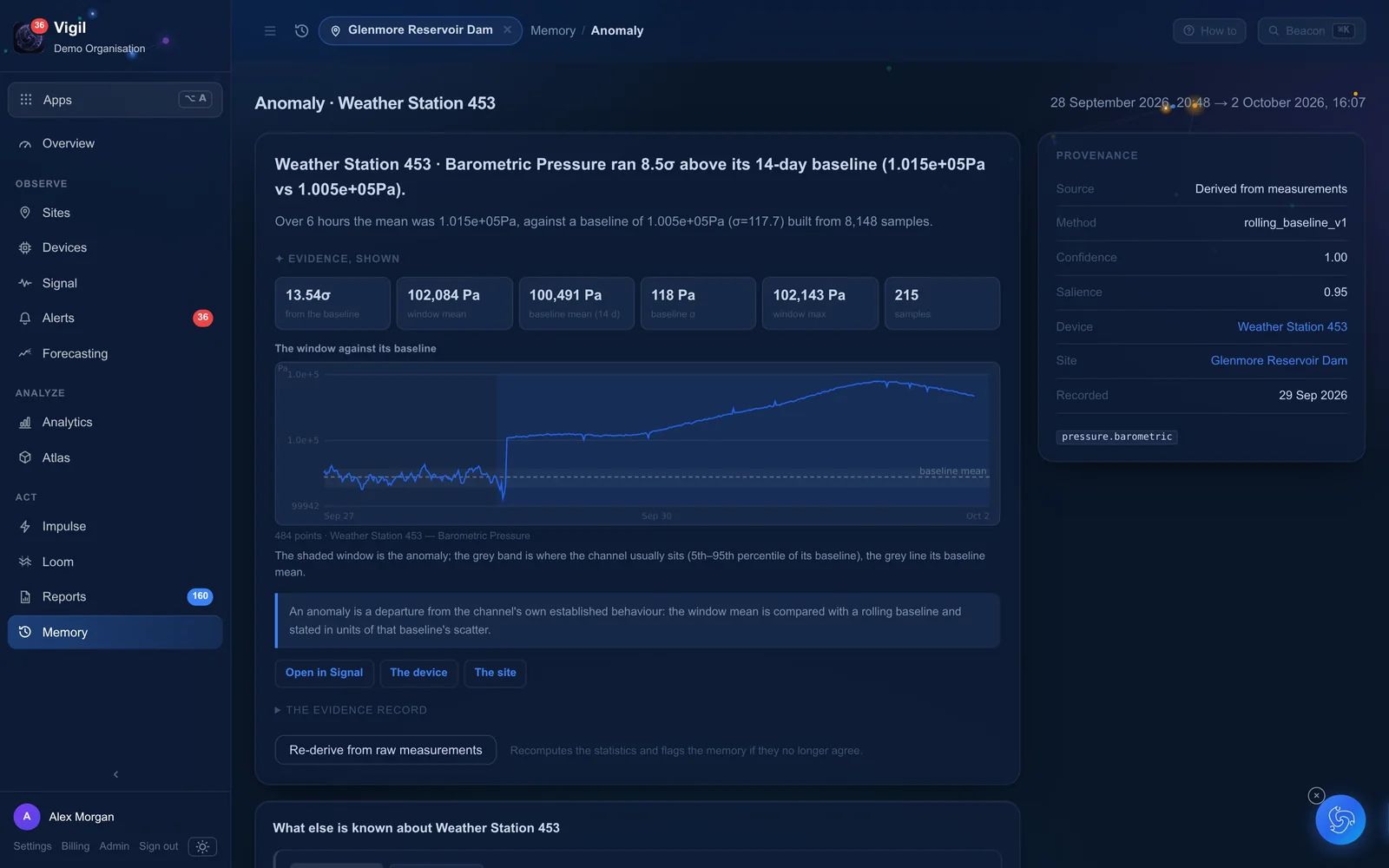
Cranes, reefers, pipelines and tank farms across a yard measured in kilometres — where the right fix at the right berth keeps everything moving.
Senses
Reefer temperatures, tank levels, pipeline pressure, crane vibration, wind.
Acts
Programmes for storms and peaks; valves and pumps on the tank farm.
Relates
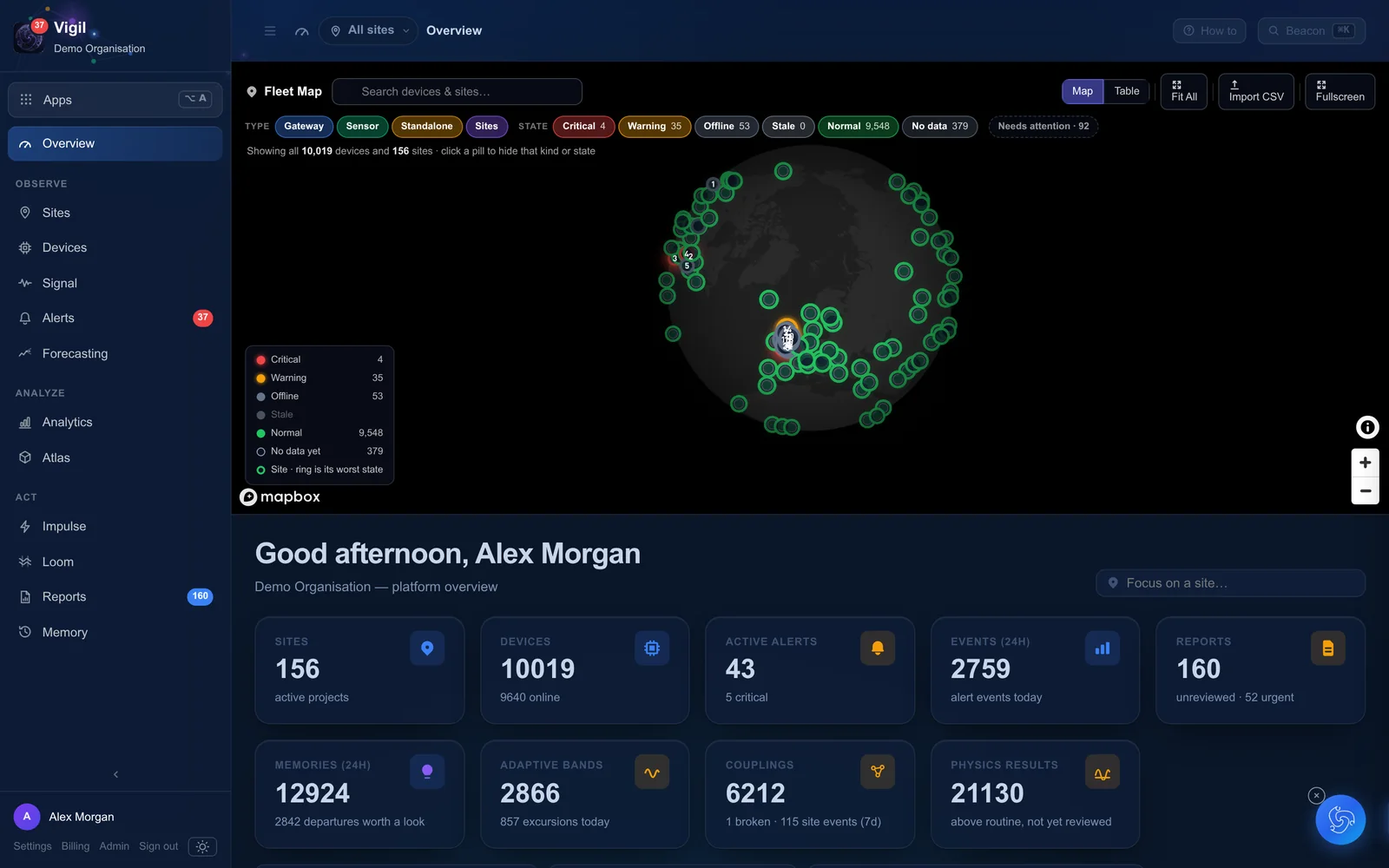
One map of every asset in the yard, and what each one depends on.
Start with one site. Grow node by node.
A pilot starts with the platform on demo data like yours, then a handful of nodes on the equipment that worries you most. Every node after that makes the whole site a little smarter.
1 · See it
A demonstration on a site like yours: Argus, Atlas, forecasts and memory, live.
2 · Pilot it
Nodes on a few critical assets — sensing first, then the first actions you approve.
3 · Spread it
More nodes, more of the site, placed by drone where it's hard to reach.
Let's make sense of your site.
Tell us about a site — a plant, a dam, a campus, a cold store. We'll show you the platform on demo data like yours and plan a pilot with nodes on your equipment.