
A facility doesn't need a robot. It needs a thousand hands.
The most useful robot in a plant isn't one that walks. It's the one already fitted to the valve, the damper, the pump and the breaker — at every one of them, all at once — sharing one memory and one judgement about when to move.
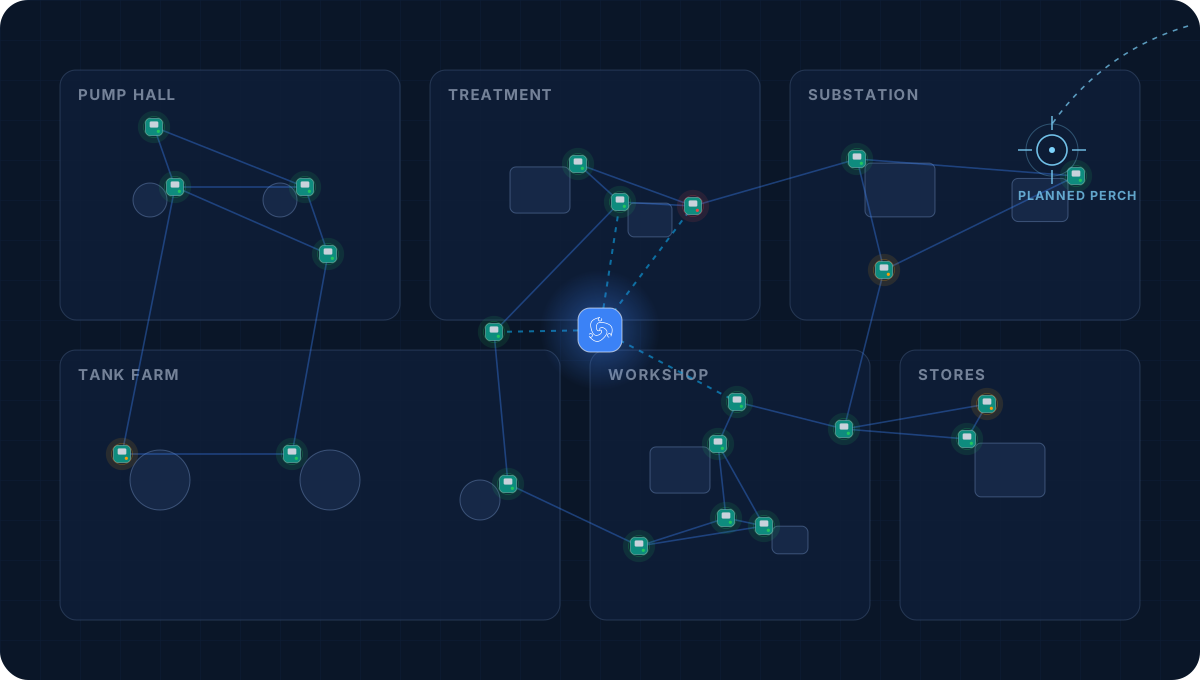
The work is spread out. So is the robot.
Humanoid robots are a remarkable answer to a different question — doing a person's job in a person's space. Keeping a facility healthy is mostly about being in hundreds of places at the right moment. That calls for a different shape of robotics.
Everywhere at once
A node at each point that matters means nothing waits for a round. The pump trips at 03:12 and the node next to it knows at 03:12.
Hands on the equipment
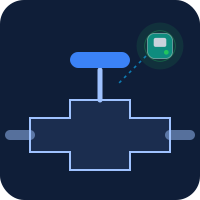
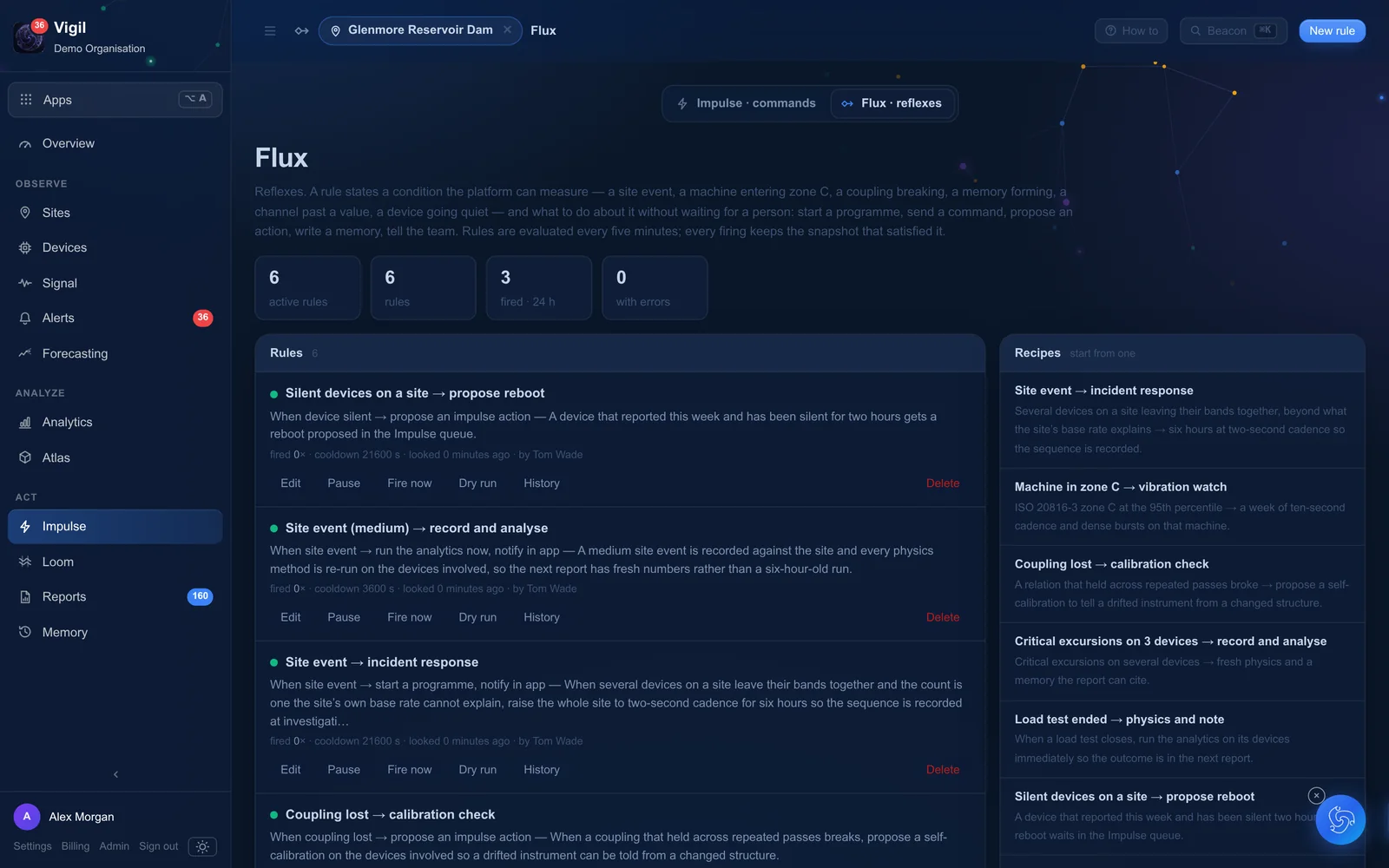
Each node can drive what it is fitted to — open a valve, start a standby pump, switch on cooling, close a gate — instead of only raising an alarm.
One shared mind
Every node feeds the same memory and the same forecasts, so an action at one corner of the site is taken knowing what is happening at all the others.
Placed where people shouldn't climb
Our Perch drones survey a structure in 3D and set nodes on the high, wet and awkward parts. Crews fit the rest with a phone.
Small, cheap, numerous
A node costs a fraction of a mobile robot. Add ten more where you need them; if one goes quiet, the rest carry on — and the platform tells you which.
Ready for mobile robots too
When a robot or a person does need to go somewhere, the platform tells it exactly where, why, and what was already tried.
What a node can move.
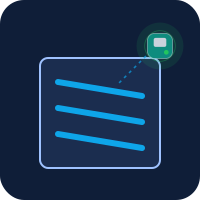
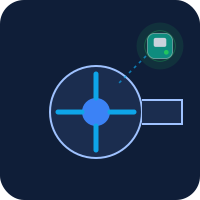
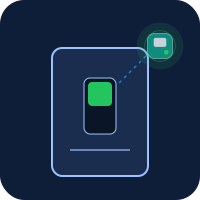
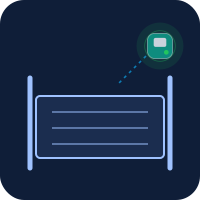
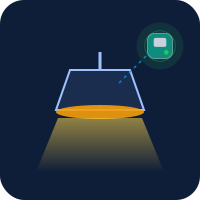
A Vigil Node measures through plug-in probes and drives the equipment it is fitted to. These are the kinds of jobs pilots start with.
It moves things. You stay in charge.
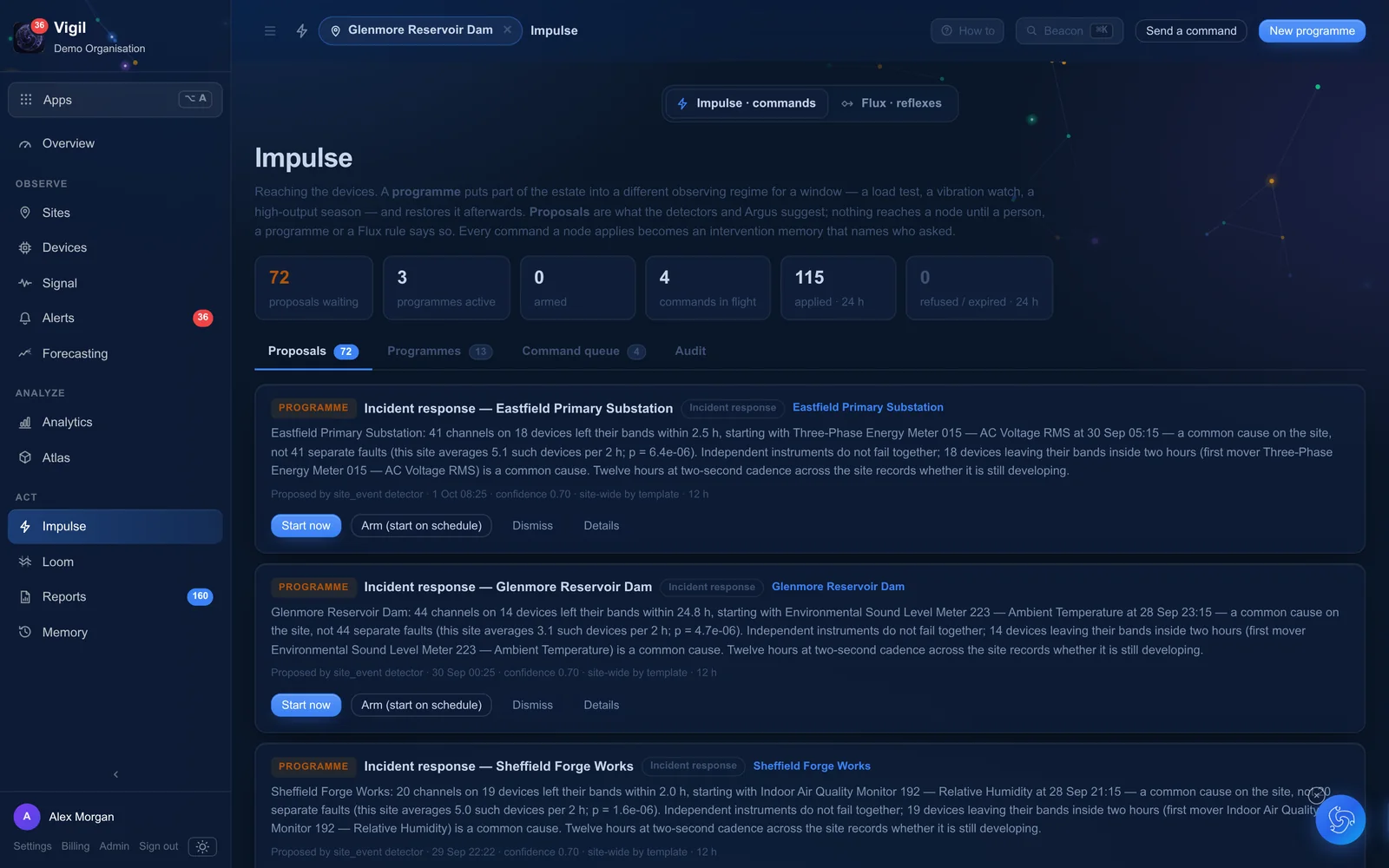
Actuation is where trust is earned. Every way Vigil acts on a site is built so a person decides, every change can be undone, and the record shows who asked for what.
Programmes that put things back
A load test, a vibration watch, a quiet period: part of the site runs differently for a window, then every setting returns to where it was — on its own.
Reflexes you can rehearse
"When a coupling breaks, start the standby pump and call the on-call engineer." Any reflex can be dry-run over yesterday's data before it is switched on.
An assistant that asks first
Argus proposes the change in plain words — the rule, the old value, the new one — and waits for Allow, Allow for this chat or Deny. Deleting and sharing always ask.
Every command remembered
Each command a node applies becomes part of the site's memory, naming the person or rule that asked for it — so the next shift, the report and the auditor all see the same story.
What distributed robotics looks like on a shift.
Illustrative scenarios, built from what the platform does today and what our nodes are being built to do.
A duty pump trips in the night.
The node on the pump sees the flow collapse; the nodes downstream see the level start to climb. A reflex starts the standby pump and confirms the flow is back. The on-call engineer wakes to one message — what happened, what was done, and a chart — rather than to an overflow.
The reservoir rises faster than forecast.
Foresight gives the piezometers a rising chance of crossing their limits by morning. A programme samples every minute instead of every fifteen for the next day, and Argus drafts a proposal to open the relief valve — which an engineer approves from their phone.
A transformer runs hotter than its peers.
Cortex notices it has stopped moving with the other units in the same weather. The node switches on its cooling fans, the site's memory records the change, and the week's report puts it at the top of the list with the evidence attached.
A door is left open after a delivery.
The temperature starts to climb against the store's normal pattern. The node closes the door, the compressor recovers, and the record an auditor will ask for is already written — with the minutes it was open and who was told.
Welcome — plugged into the same nervous system.
Mobile and humanoid robots are wonderful at jobs that need hands in a person's space. On a Vigil site they don't wander looking for problems: the platform sends them where the nodes say they're needed, with the context of what happened, what was tried and what to check. The distributed layer finds the work; the mobile robot does the part only it can do.
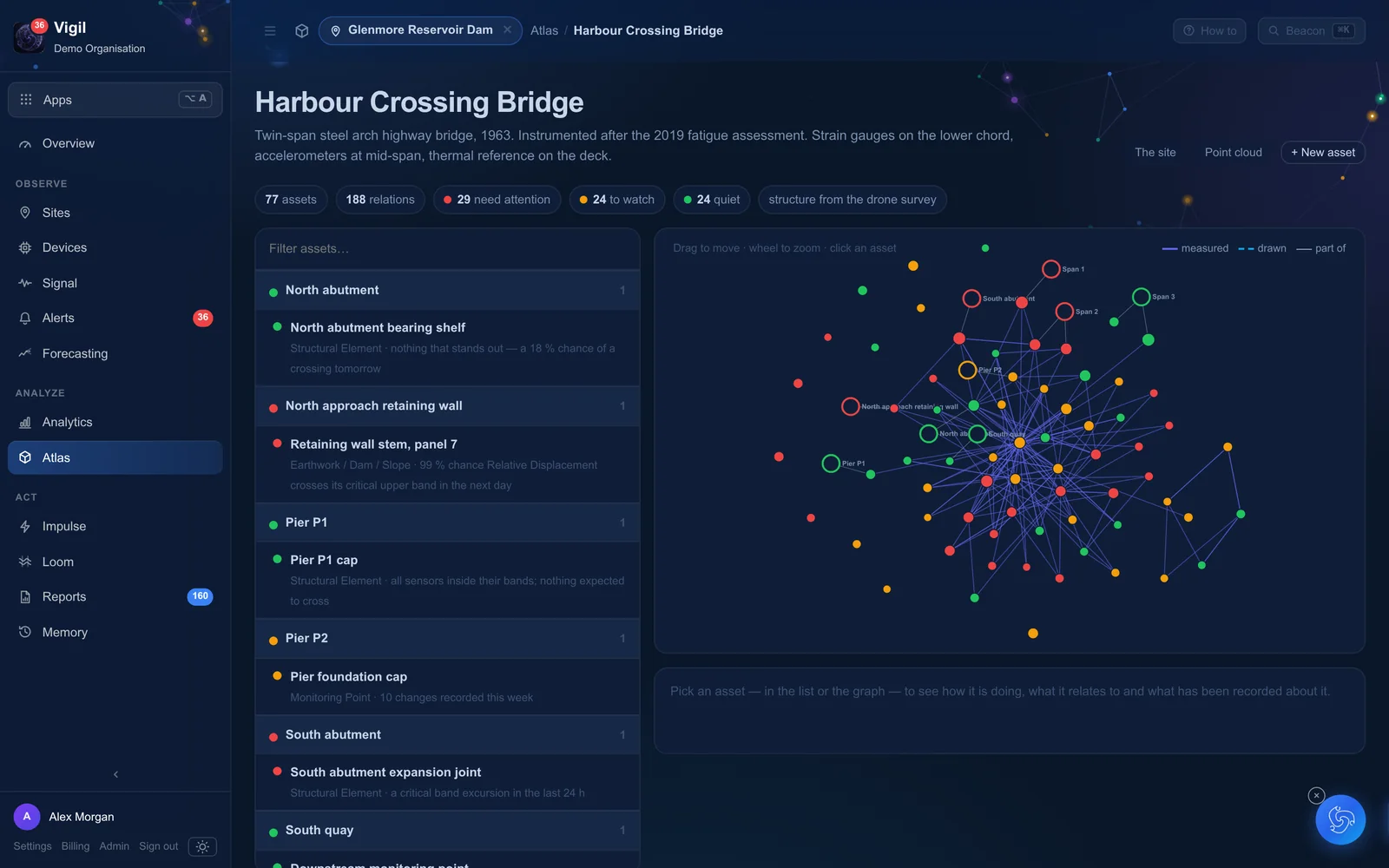
- One map of every asset and how it relates, for people and machines alike
- Tasks with the evidence attached, not just a location
- What the robot did, recorded in the same memory as everything else
Let's make sense of your site.
Tell us about a site — a plant, a dam, a campus, a cold store. We'll show you the platform on demo data like yours and plan a pilot with nodes on your equipment.