
Give your whole facility senses, memory and hands.
One humanoid robot can stand in one place. Your facility needs attention in hundreds. Vigil spreads intelligence across a site instead: small wireless nodes that measure, remember, foresee trouble and act on the equipment beside them — valves, pumps, fans, breakers — coordinated by one platform that asks before it moves anything.
Built for places where the work is spread out
What it is like to just ask.
The running platform on the demo environment, narrated in its own voice. Under two minutes.
Making Sense.
Three meanings, one company. We make the sensors, we make sense of what they measure, and we make that sense useful to the people who keep the world running — not just to data scientists.
Nodes that feel — and reach out
Small wireless nodes and plug-in probes that measure the physical world, and move the equipment beside them.
The Vigil NodeA platform that understands
It learns what normal looks like, remembers everything that happens, sees what's coming, and knows how it all connects.
The platformPlain words for everyone
Ask a question, get an answer you can act on — on the phone, in a report, from Argus. No dashboards to decode.
For people in the fieldOne robot can't be everywhere.
A thousand small ones can.
A facility's work happens in hundreds of places at once — a pump in one hall, a valve on a tank three hundred metres away, a breaker in a substation, a damper on a roof. Robotics that matches that shape is distributed.
One general-purpose robot
- Walks the rounds — one place at a time
- Sees a gauge only while it is looking at it
- Needs paths, charging and a building arranged around it
- Forgets the site between visits unless someone writes it down
Intelligence distributed across the site
- A node at every point that matters — always there, day and night
- Each one measures, and can move the thing it is fitted to
- Placed by drone on the hard-to-reach parts, by hand on the rest
- One platform remembers everything, sees what's coming and coordinates the lot
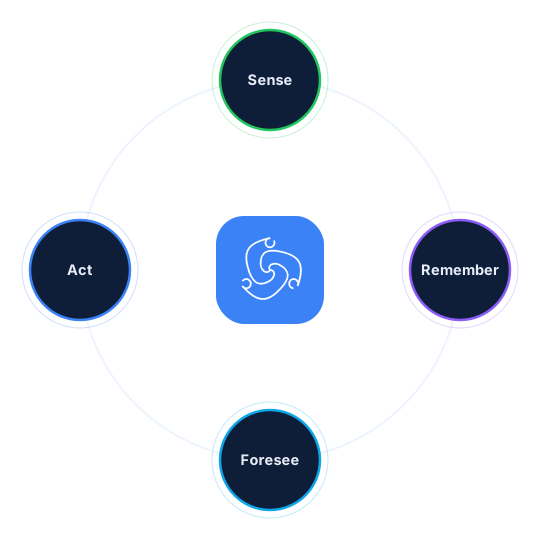
Sense. Remember. Foresee. Act.
Every node feeds one loop. The longer it runs, the more it knows about your site — and the earlier it sees trouble coming.
Sense
Nodes and plug-in probes measure what matters. Normal ranges are learned for every reading — no thresholds to set.
Remember
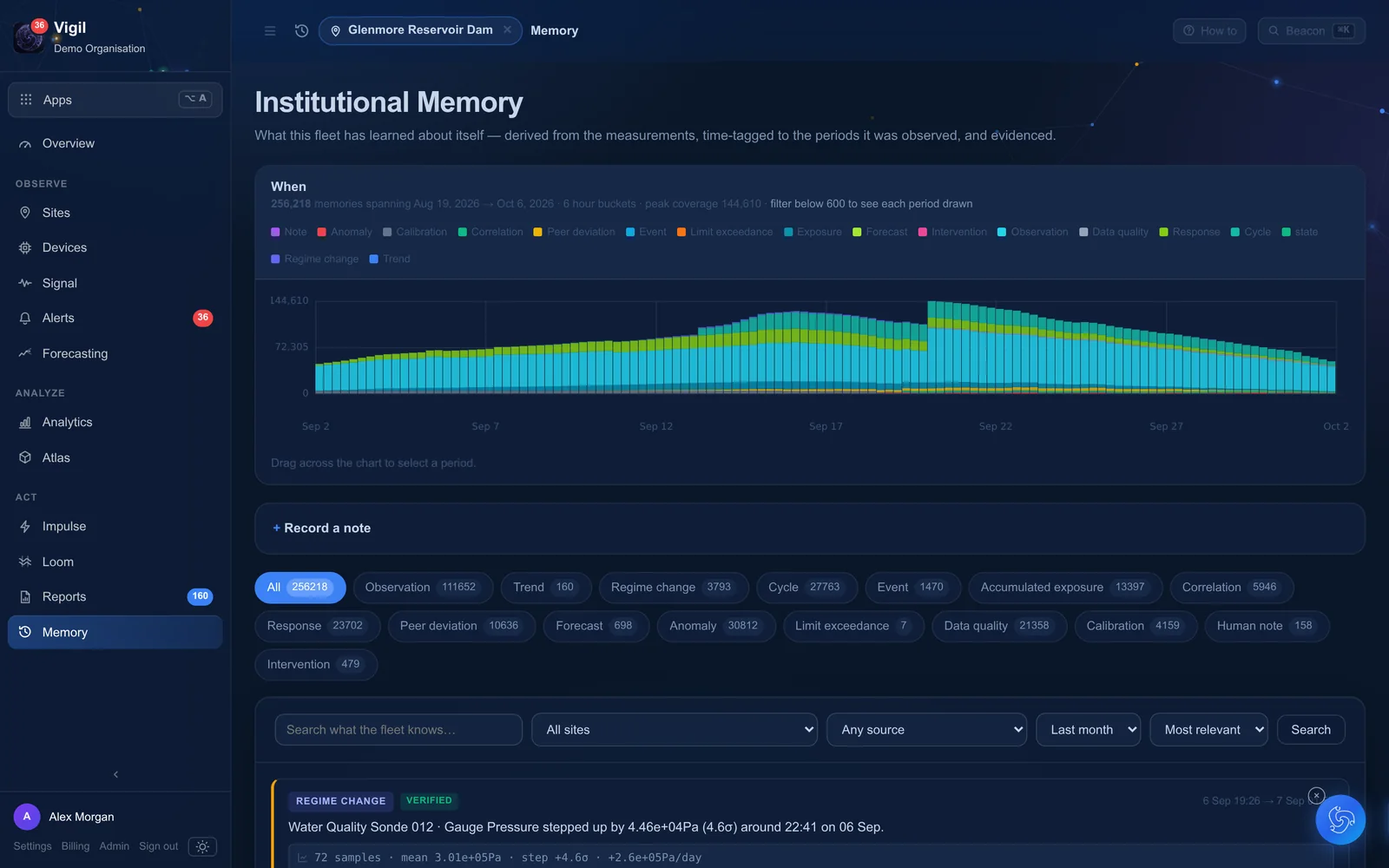
Every event, finding, note and fix becomes part of the site's memory — with who recorded it and when.
Foresee
Forecasts for every channel, the chance of crossing each limit, and what-ifs through the physics that drive them.
Act
Programmes, reflexes and an AI assistant move valves, fans and settings — and always ask a person first.
An operating system for a facility that thinks.
Real screens from the Vigil platform. Ask it anything, see how everything relates, watch what comes next — and act on it.
Every corner of the site, connected.
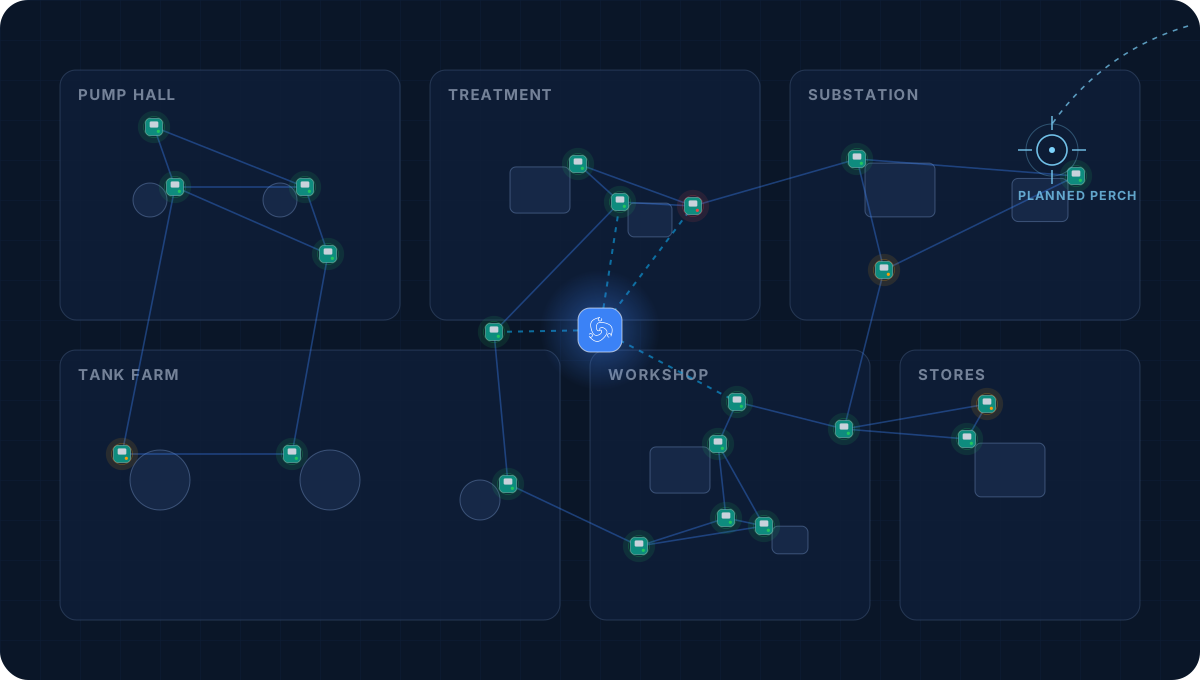
Nodes link into one wireless mesh that covers halls, yards, roofs and tunnels. Each reports how its corner is doing; together they give the platform — and your people — the whole picture.
- A health state for every asset, with the reason in words
- Site-wide events spotted when many readings move together
- Drone-placed nodes on the parts people shouldn't have to climb
- A phone in every pocket: alerts, notes and photos from the field
The first boards are in our hands.
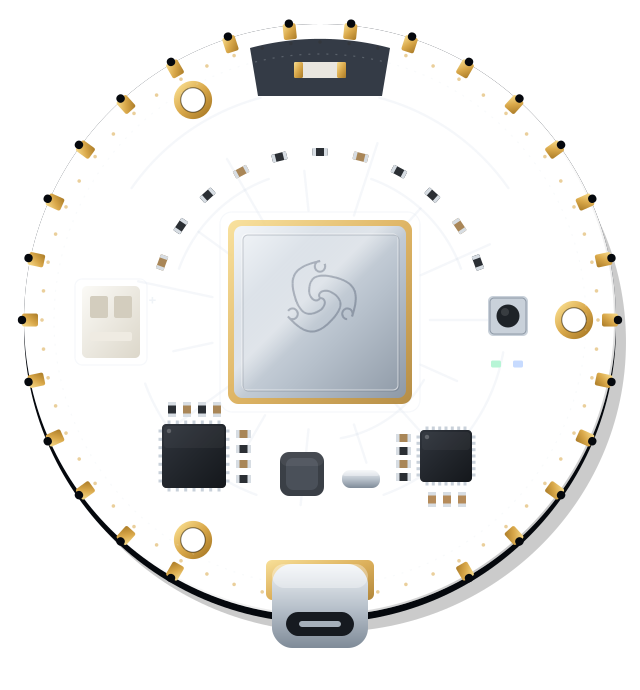
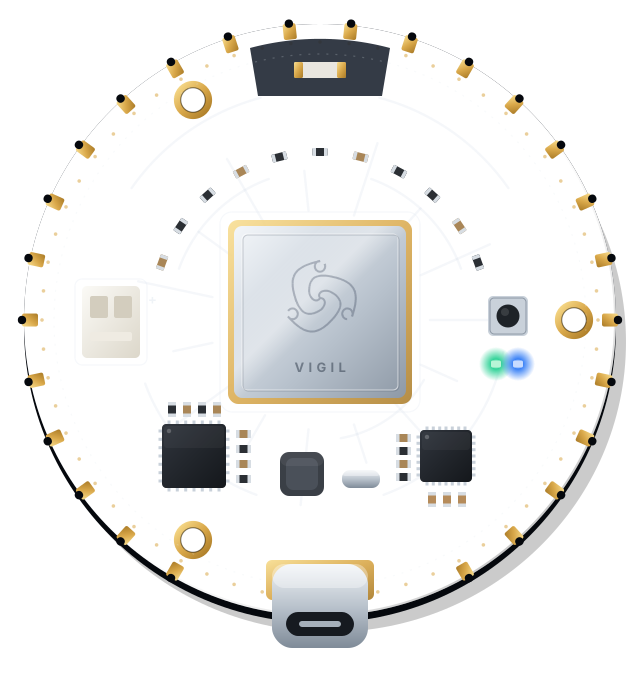
The Vigil Node is small enough to fit almost anywhere and finished enough to leave there: a wireless node that measures through plug-in probes and drives the equipment it is fitted to.
Wireless mesh
Low-power radio that links node to node across a site.
Battery or USB-C
On-board power management for long life away from mains.
Plug-in probes
Sensors that introduce themselves the moment they're connected.
Actuation
Outputs that move valves, relays, dampers and more.
Safer work. Less downtime. Nothing forgotten.
Safer work
Fewer climbs, fewer confined-space entries, fewer night call-outs to check a reading. The node is already there.
Less downtime
Slow drifts, rising noise and broken daily patterns are caught early — before they become a stoppage.
Early prevention
Forecasts say what will cross a limit, roughly when, and how sure they are — so you act on a date, not a hunch.
Nothing forgotten
Notes, photos and fixes from every shift become the site's memory, so knowledge stays when people move on.
It notices the strange stuff with nothing set up.
We plant known faults in a labelled simulation of 108 sensor channels and let the platform find them — no thresholds, no rules, no tuning. Out of twelve channels for each kind of fault:
Results from our behaviour benchmark (simulated channels with injected faults and unchanged controls). Your site will differ; we'll measure it with you in a pilot.
The site's notebook, in every pocket.
The phone app ranks what needs you, lets you act on an alert with a swipe, and turns a note or a photo taken beside a machine into part of the site's memory — read by the next shift, by reports, and by Argus.
Built for the places a single robot can't cover.
Water & wastewater
Pumps, dosing, tanks and outfalls across a works — and the valves that run them.
Dams & earthworks
Piezometers, seepage and movement on a structure people can't walk every day.
Bridges & structures
Strain, tilt and vibration placed by drone on spans and girders.
Substations & energy
Transformer heat, breaker health and cooling that switches itself on.
Plants & workshops
Machine health, utilities and the shutdowns you'd rather schedule than suffer.
Cold chain & food
Every store, door and compressor — with the record an auditor asks for.
Data centres & campuses
Rooms, racks, plant and air quality, building by building.
Greenhouses & farms
Climate, irrigation and vents that open before the heat does damage.
Let's make sense of your site.
Tell us about a site — a plant, a dam, a campus, a cold store. We'll show you the platform on demo data like yours and plan a pilot with nodes on your equipment.